


What Is Customer Success: A Value Partnership Beyond Transactions
Customer success is a customer-centric business philosophy that goes beyond the traditional transactional mindset of “payment in exchange for delivery” and builds a value bridge that connects companies and their customers.
If business collaboration is compared to a partnership dance, customer success means both sides move in alignment — achieving mutual growth and shared value through continuous cooperation.
From an outcome perspective, customer success is not simply about delivering a product or service. It means that customers are able to achieve their own business goals through the solutions provided by the company.
For software development companies, software delivery is only the starting point. True success lies in helping customers achieve their business objectives through the software.
From a lifecycle perspective, customer success represents continuous support throughout the entire partnership journey.
In the early stages, development teams act as “business translators”, transforming customers’ initial ideas into clear product strategies and technical solutions.
During development, they become “digital partners”, ensuring every feature aligns with real business scenarios.
After delivery, they evolve into “technology guardians”, providing ongoing support, including 24/7 technical assistance, system upgrades, and continuous optimization based on customers’ evolving business needs — helping them adapt confidently to market changes.
From a mindset perspective, customer success requires companies to think from the customer’s perspective — not only addressing current needs but also anticipating future challenges and opportunities.
The Origin of Customer Success: Wisdom Grown from Business Practice
The foundation of customer success was planted long before the concept had a formal name. Throughout the history of commerce, businesses have always understood that lasting relationships come from continuously creating value for customers.
Looking back at early craftsmanship, artisans would refine their products repeatedly to earn customer trust and satisfaction.
In the 19th century, watchmakers would carefully adjust and polish mechanical components to ensure precise timekeeping, sometimes even visiting customers personally for calibration.
In the 20th century, tailors would repeatedly refine designs and fittings to create garments that perfectly matched their customers.
This dedication to understanding and fulfilling customer needs represents the earliest form of the customer success mindset.
The concept of customer success truly emerged with the SaaS transformation in the early 21st century. At that time, SaaS companies faced challenges such as high customer churn rates and difficulties in renewals. Traditional software sales models focused primarily on product delivery while overlooking the customer experience after purchase.
Companies such as Salesforce recognized that long-term business success depends on customer success.
In the software industry, this philosophy is particularly important. Customer success breaks away from the traditional mindset of “delivery means the end of the project” and transforms the relationship between companies and customers into a long-term value partnership — creating sustainable growth and mutual success.
GeekOnUp Customer Success Methodology
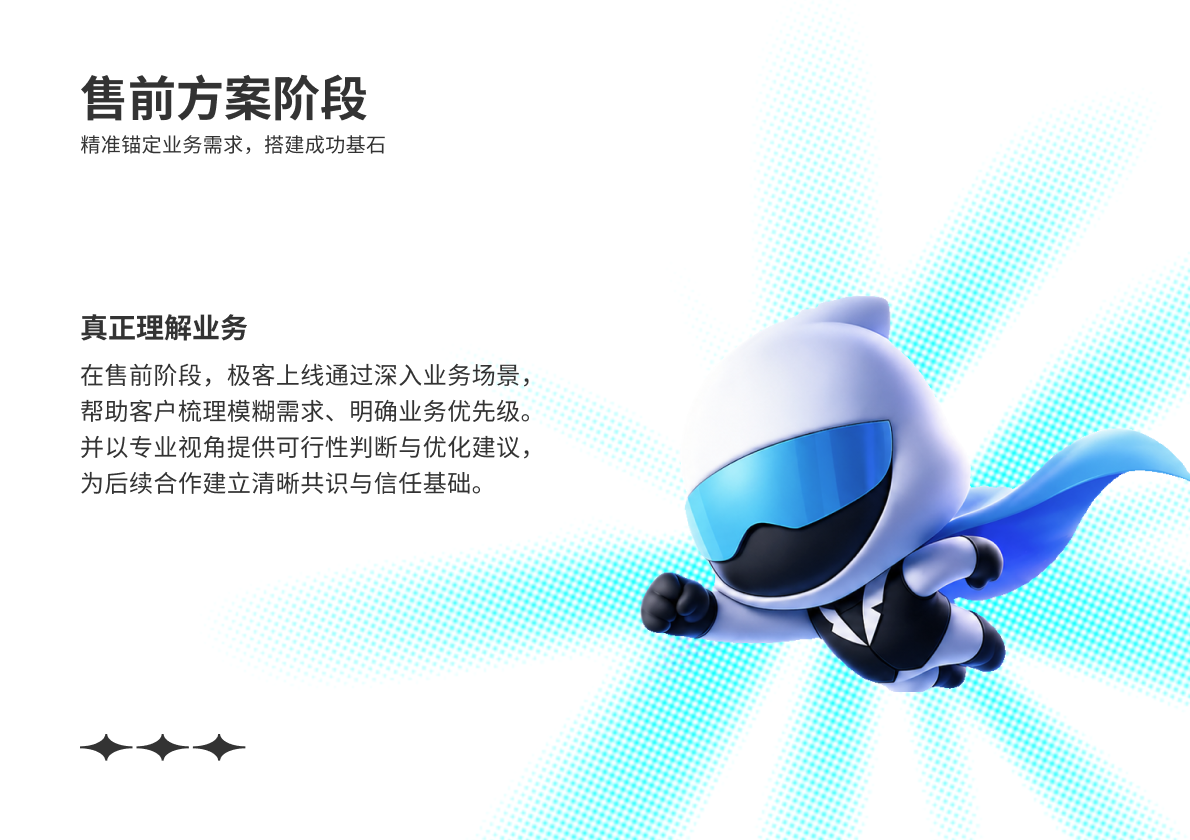
1. Pre-Sales Solution Phase
Customer success begins with a deep understanding of the customer’s business.
During the pre-sales phase, GeekOnUp dives into real business scenarios to help clients clarify unclear requirements, define business priorities, and provide professional feasibility assessments and optimization recommendations.
Through this approach, we establish clear alignment, mutual understanding, and a foundation of trust for long-term collaboration.
2. Project Initiation Phase
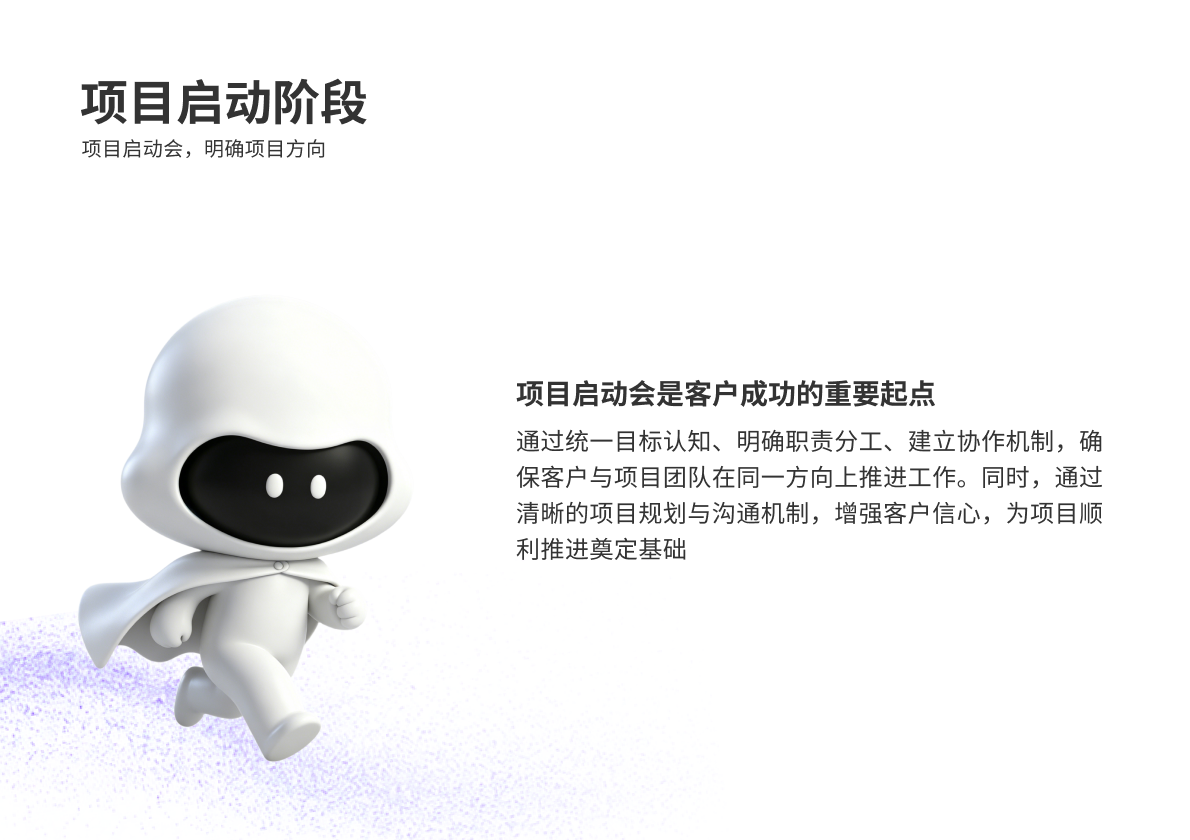
The project kickoff meeting is a critical starting point for customer success.
By aligning objectives, defining roles and responsibilities, and establishing collaboration mechanisms, we ensure that both the client and project team move forward with a shared direction.
Through clear project planning and communication processes, we strengthen client confidence and create a solid foundation for successful project execution.
3. Planning Phase
1. Project Gantt Chart
A project Gantt chart provides a clear timeline and milestones, helping clients establish realistic delivery expectations and build confidence.
It also ensures accurate requirement implementation, transparent and controllable progress tracking, while providing a foundation for risk identification and resource allocation.
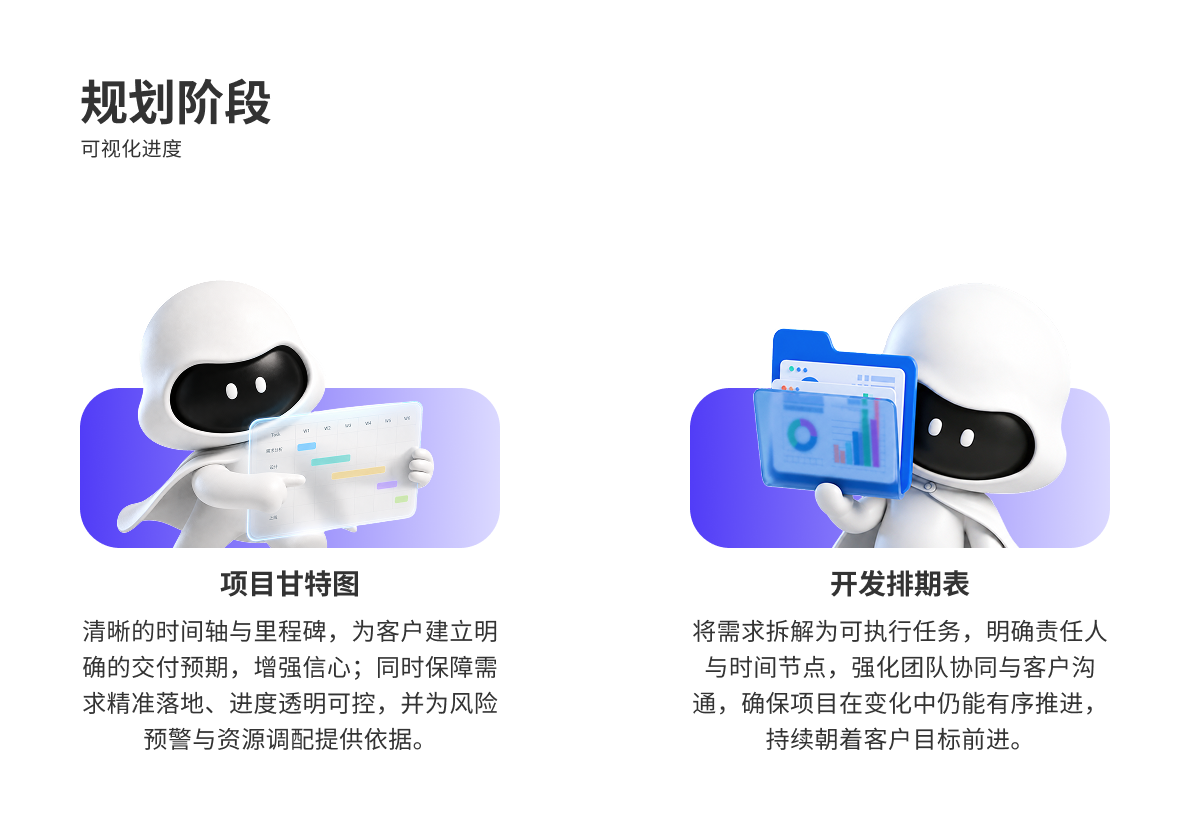
2. Development Schedule
By breaking down requirements into executable tasks, defining clear owners and timelines, we strengthen team collaboration and client communication.
This ensures that projects remain organized and continue moving toward client objectives, even as requirements evolve and changes occur throughout the development process.
4. Development Phase
Entering the mid-stage of the partnership, the focus shifts to ensuring that software is developed with high quality and efficiency according to client requirements, while continuously creating value for customers.
1. Agile Development
The GeekOnUp development team establishes a transparent collaboration mechanism and adopts the Scrum agile development framework. Projects are divided into multiple iteration cycles with clearly defined delivery objectives, ensuring that development outcomes accurately align with clients’ business goals.
2. Daily Stand-up Meetings
During each iteration, daily stand-up meetings maintain efficient team communication. Team members share progress, identify issues, and address challenges quickly to keep development moving smoothly.
3. Weekly Project Meetings
The primary goal of weekly project meetings is to align on overall project progress and ensure that both team members and clients have a shared understanding of the current project status.
Unlike daily stand-ups, which focus on individual task updates, weekly meetings provide a broader view of project progress, milestone completion, and key risks.
By reviewing weekly project reports in detail, we clearly present task completion rates, delayed items, and potential blockers. This reduces information gaps during communication and ensures all stakeholders have a comprehensive understanding of the project.
4. Weekly Project Reports
Through weekly reports, clients gain detailed visibility into the work completed around their business needs, including feature development progress and module testing results.
The reports also analyze how completed features contribute to business process optimization, efficiency improvements, and cost reduction within the client’s specific business scenarios.
Issue tracking and risk alerts included in weekly reports provide valuable references for continuous customer success management and future project optimization.
5. Delivery Phase
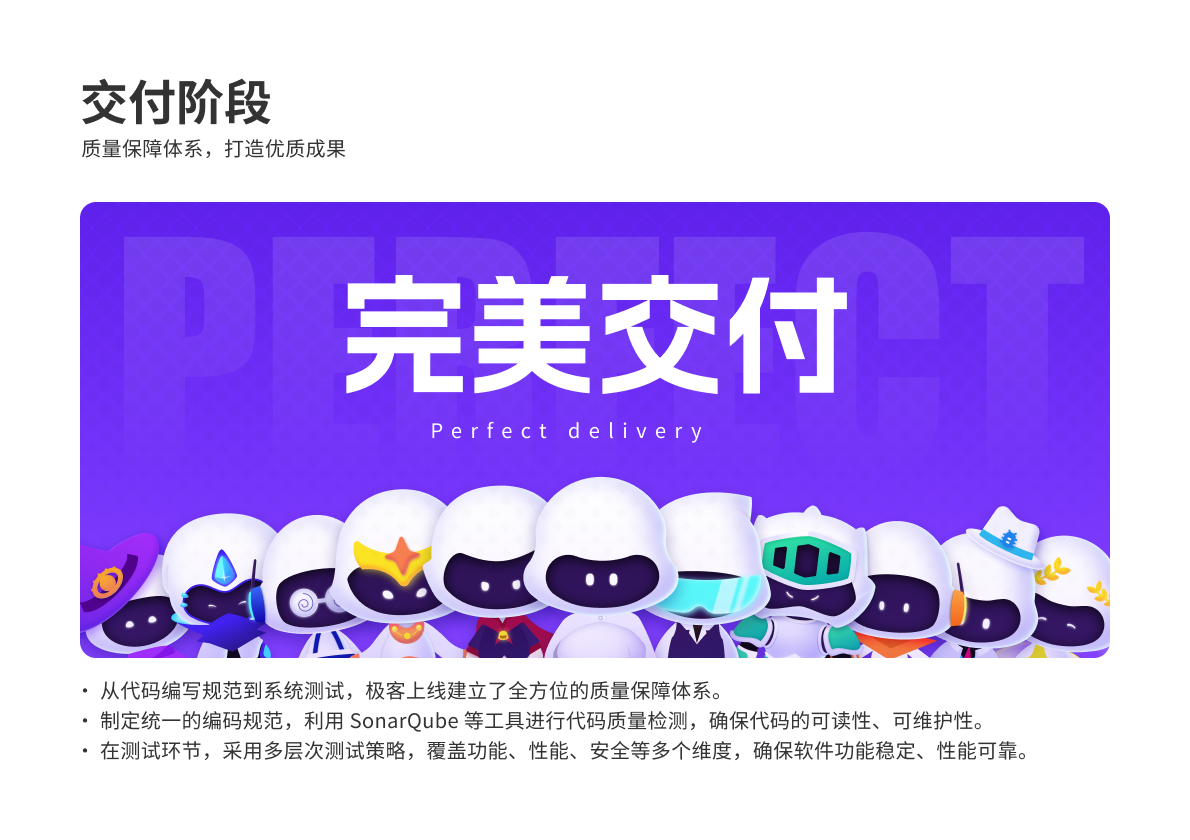
From coding standards to system testing, GeekOnUp has established a comprehensive quality assurance system to ensure high-quality delivery.
We define unified coding standards and utilize tools such as SonarQube for code quality analysis, ensuring code readability, maintainability, and long-term scalability.
During the testing phase, we adopt a multi-level testing strategy covering functional, performance, and security aspects to ensure software stability, reliability, and consistent performance.
6. Continuous Growth Phase
At GeekOnUp, product launch is not the end of our service — it is the beginning of our clients’ business growth journey.
Post-launch support goes beyond technical maintenance. Through a combination of operational assurance, business enablement, and ecosystem collaboration, we transform software into an engine that drives continuous business growth.
This service model not only ensures stable system operation but also continuously unlocks the value of technology within business scenarios, ultimately creating long-term success for both our clients and GeekOnUp.
For example, GeekOnUp’s monitoring and alerting mechanisms are designed to proactively safeguard customer success through forward-looking technology capabilities. Meanwhile, our full-lifecycle service framework serves as a key driver in helping businesses evolve from being merely “functional” to becoming “growth-driven.”
1. Continuous Maintenance and Operational Support
- Provide essential operational services, including server health checks, data backups, and security vulnerability remediation.
- Release regular feature updates based on clients’ evolving business needs, such as monthly minor releases and quarterly major upgrades, to continuously improve software performance and user experience.
- Conduct regular health inspections to evaluate system status, identify potential risks, and provide inspection reports.
- Provide 24/7 monitoring, alerting, and response services to identify and resolve issues at an early stage, minimizing business disruption.
2. Emergency Response and Disaster Recovery Services
- Develop tiered response plans for scenarios such as data loss, cyberattacks, hardware failures, and software failures, with quarterly emergency drills.
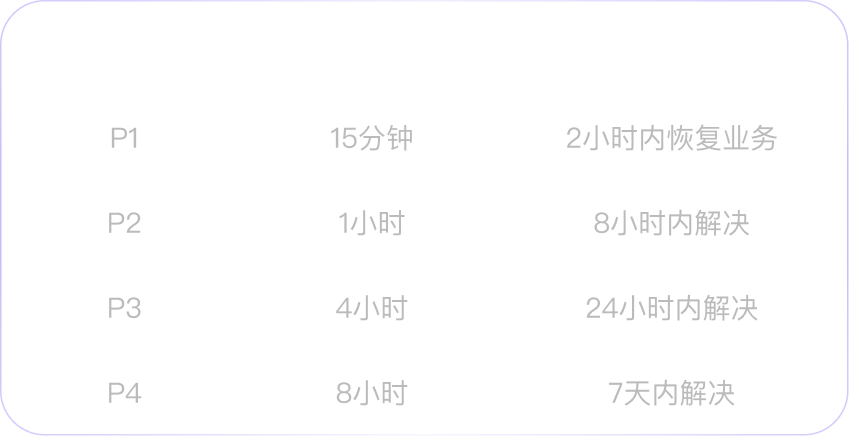
- Provide disaster recovery deployment services for critical clients. When local infrastructure failures occur, automatic failover mechanisms ensure system availability of up to 99.99%.
- Accumulated incident data is continuously analyzed to optimize service strategies, such as identifying high-risk periods for staffing adjustments and creating industry-specific emergency response templates.
3. Training and Enablement Services
We provide multi-level training programs, including:
- Basic Training: Core feature usage and system operation.
- Intermediate Training: Advanced functionality and workflow optimization.
- Advanced Training: Administrator-level management and configuration.
Additional enablement services include:
- Common issue resolution guidance
- Data analysis report interpretation
- Industry best practice sharing
- Industry trend insights
Training can be delivered through multiple formats, including online sessions, offline workshops, and video tutorials.
4. Data-Driven Value-Added Services to Maximize Customer Value
- Collect user behavior data through in-system tracking, including usage frequency, feature engagement time, and operational patterns, to understand customer workflows and pain points.
- Provide personalized optimization recommendations based on data insights.
- Aggregate common requirements and technical challenges across industries, and regularly deliver industry-specific solution enhancements.
5. Compliance and Security Services
- Compliance Audit Support: Assist clients with compliance requirements such as ISO 27001 and HIPAA, providing support for log auditing, access control, and data encryption.
- Cybersecurity Protection and Response: Deploy security solutions such as WAF (Web Application Firewall) and IDS (Intrusion Detection System) to monitor threats including DDoS attacks and SQL injection attempts, with rapid response measures such as traffic filtering and vulnerability remediation.
6. Customer Lifecycle Management Services
Regular Business Review (BR) Meetings: Conduct quarterly, semi-annual, and annual business review meetings with clients to evaluate software performance, review business outcomes, and align on future goals and improvement plans.