
I am Deng Yichuan, founder and CEO of GeekOnUp.
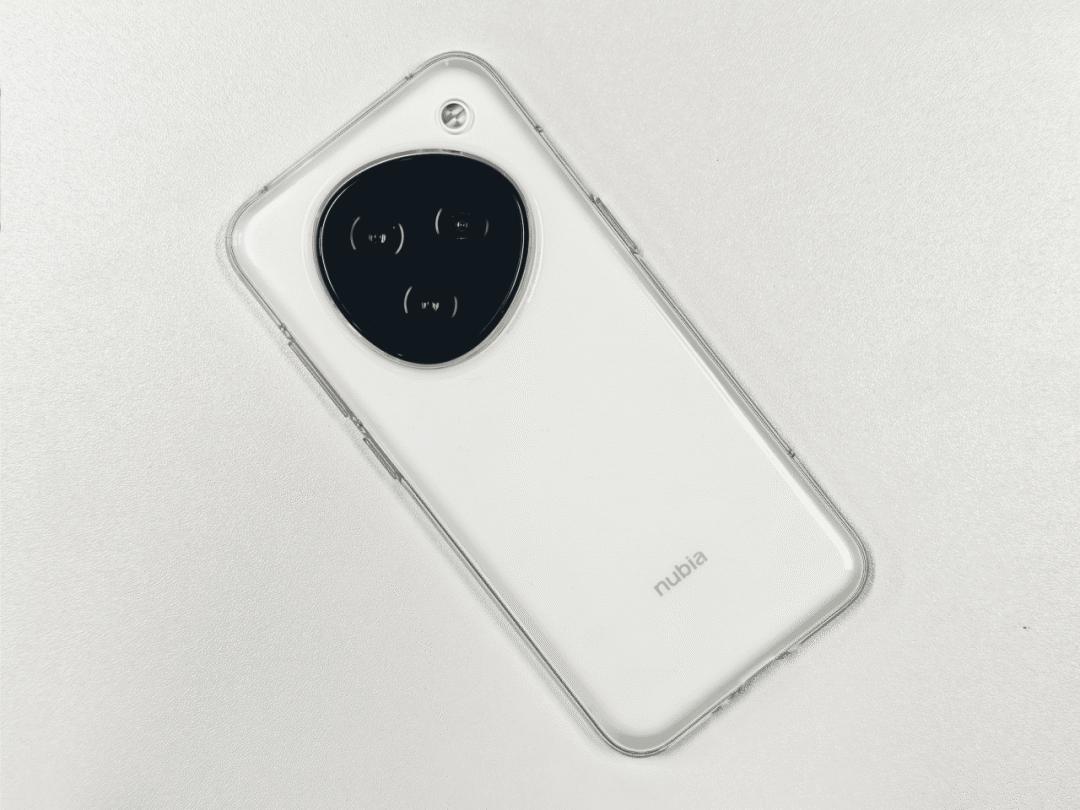
Today, rather than discussing software development, I want to share our experience with a product that has attracted substantial attention:the Nubia M153 with the Doubao Mobile Assistant.。
The official price was RMB 3,499. As an experimental product, only 30,000 units were prepared and all have sold out. I missed the initial release and purchased one at a premium, which itself reflects the level of interest.

The phone hardware is relatively conventional. What made the industry pay attention wasthe Doubao Mobile Assistant behind it.。

Why would a sold-out, discontinued phone cause such a strong reaction?
1. The phone is not simply more capable; the logic of the operating system has changed
The primary innovation is not the model. It is the decision to embed an intelligent agent in the GUI layer, allowing the system to interpret intent instead of waiting for a sequence of taps.
This is not a voice assistant scaled up tenfold. It is an early implementation of what a future operating system may become.
2. After two weeks, the experience felt like entering aconflict between old and new interaction models.
For more than a decade, the user has been the operator and the phone has executed individual commands. Doubao attempts to make the phone a collaborator.
That change in relationship makes it feel less like a conventional phone and more like a role capable of completing work on your behalf.
3. AutoGLM goes open source: one product closes, and an ecosystem begins
At 2:00 a.m. on the day after the Doubao phone was discontinued, AutoGLM announced an open-source local small-model solution and immediately drew widespread attention.
Doubao may have closed one door, but AutoGLM opened a much larger space for experimentation.
In the future, every phone may contain its own small model and lightweight agent.
The Doubao phone demonstrated a possible interface to that future.
AutoGLM showed that the underlying path is now open to other teams.
As a technology company,GeekOnUp needed to investigate that path firsthand.

International observers asked what might happen if Google embedded Gemini directly into Android.
That leads to a counterintuitive point: we did not buy the phonebecause it was good. We bought it because it was important.
News of the Doubao assistant's discontinuation spread on December 5, and the narrative quickly shifted from 'the first AI phone' to 'the AI phone that was blocked.' For us, its significance extends beyond marketing, public relations, interface design, or performance.
There is one reason the product deserves close study:it is the first time we have seen AI placed this deeply into an operating system.
Awkward but Directional
Several GeekOnUp colleagues tested the device, and our conclusion was consistent.
As a conventional flagship phone, it is imperfect and sometimes awkward.
- Several interactions still feel like feature demonstrations.
- Agent response speed and reliability are not yet smooth in every scenario.
- Some system-level actions do not align naturally with habits users have formed over many years.

One international user has already used Doubao to order a drone-delivered meal automatically.
Viewed as an experimental or concept device, however, the direction becomes unusually clear.
The objective is not to make the phone more powerful. It is to rewrite a more fundamental assumption:
How should a phone work?
From Interfaces to Intent
The most visible change is a move from icons as the entry point to intent as the entry point.
Previously, a user opened an app, found the relevant feature, and moved through several layers of menus.
Now the interaction resembles speaking toan assistant that can complete the task,using instructions such as:
- 'Turn this conversation into an apology and send it to her.'
- 'Create a collage from the photos I just took that is ready to share.'
- 'Rewrite this text as a more formal business email.'
We took a quick photo of our mascot Xiaobai and asked Doubao to add a Christmas hat, send the image to a colleague through Feishu, and include a seasonal message.
The phone executed the workflow in order:find the image, edit in the hat, save the result, open Feishu, locate the contact, then send the image with a message.

With Christmas approaching, we wish everyone a happy holiday season.
The process was slightly slow but completed as one coherent sequence.The logic was complete, the execution path was clear, and it could continue in the background.
The user states the outcome in the foreground, then watches a video or plays a game while the assistant completes the process and returns the result for approval.
The System Understands User Actions
Another strong impression was that the assistant did not simply wait to be fed a command.It attempted to interpret the situation visible on the screen.
When we tested screenshot recognition and suggested replies, nearly every colleague had the same reaction:
'It genuinely understood the conversation.'
Each message in the screenshot was converted into structured context: who said what, the tone, and the preceding conversation. The agent then generated a recommendation from that information.
Technically, this is an early GUI agent.
The system no longer considers only which button was tapped. It begins to ask
what task context the user is currently in.
Three trends already taking shape
The Doubao Mobile Assistant gives us an early view of how AI may redefine operating systems.
Trend 1: the phone moves from an execution tool to a task agent
Instead of opening apps and operating them manually, users may tell an agent:
- 'Organize my weekly report.'
- 'Turn this group of photos into a poster.'
- 'Find my three most recent conversations with this customer.'
The agent then orchestrates capabilities across applications. Doubao provides a clear early version of that model.
Trend 2: on-device models become central to privacy
Zhipu introduced the AutoGLM mobile agent a year earlier, although the initial implementation remained immature.
The recent open-source release of AutoGLM points in a clear direction:more mobile intelligence will run locally.
The benefits of on-device inference are direct:
- private information does not need to leave the device,
- latency is extremely low,
- and both capability and cost can be controlled.
For enterprise applications, those properties can be transformative.
Trend 3: workflows move from manual operation to agent orchestration
Every role in a future enterprise may have a specialized agent:
- a sales agent,
- a data-analysis agent,
- a reporting agent,
- an operations agent,
- and potentially even an executive agent.
The Doubao Mobile Assistant is the first agent we have used that begins to feel suitable for everyday use.
It is not the final form, but it makes one statement convincingly:the direction is now visible.
Why we needed to buy it
No one in the office discussed the camera or benchmark scores while testing the phone.
Our engineers immediately inspected system calls.
Product colleagues asked, 'What makes this interaction possible?'
Designers asked, 'How was this semantic flow constructed?'
We concentrated on three questions:
- Can a system-level agent operate reliably in practice?
- How far can an architecture combining a small local model with a large cloud model extend?
- Will this architecture become a dividing line in application development over the next two to three years?
This was more than a product unboxing. It was an opportunity to examine a technology transition while it was happening.
Few other phones have attempted to turn the operating system intoan orchestratable intelligent agent.That makes the device unusually valuable for study.
We know
this is a starting point, not an endpoint.
We look at the Doubao phone asa blueprint for a future operating system.

We are analyzing elements including
- system-level screenshot hooks,
- intent-routing logic,
- structured extraction from the GUI,
- system API call chains,
- and agent-workflow orchestration.
The strategic question iswhether enterprise application development will be fundamentally rewritten within one or two years.
An early device worth preserving
Without exaggerating the product's maturity, Doubao is the first public implementation that makes the original vision for Siri from 14 years ago feel tangible.
It remains a technical preview.
But it may bethe first prototype of the AI phone era.。
Its importance does not come from current polish. It comes from attempting to turn the operating system intoan orchestratable intelligent agent.。
Early devices of this kind are often more informative than mature mass-market products.

We wanted to preserve this first prototype as a reference point.
Three trends already taking shape
As a technology company, GeekOnUp needs to remain close enough to emerging products to sense structural change early.

Active AI adoption is part of our company culture.
A team does not need to follow every trend, but it cannot ignore an important market signal.
This product matters because it indicates that
competition to define the AI operating system has begun.
Without testing the boundary firsthand, teams risk missing the next major application entry point.

Even our meeting rooms are named after leading AI models.
At GeekOnUp, our work centers onintegrated systems connecting business, data, and AI,helping companies move from basic adoption toward measurable growth.
The agent era closely aligns with that direction:
- applications become capability modules rather than isolated interfaces,
- workflows become collaborations between AI and people rather than purely manual processes,
- and enterprises need intelligent operating systems, not only conventional software.
If the Doubao phone is a consumer preview of that transition, our roleis to make the underlying capabilities work in complex enterprise scenarios.
On being an early adopter
Questions, risks, and constraints are real. Nearly every historic technology transition has advanced through similar controversy.
Innovators are rare, but becoming an early adopter is a deliberate choice rather than an inherent trait.Early adopters accept immature products, higher experimentation costs, and recurring questions such as
- 'What can this do today?'
- 'Is this solving a problem that does not exist?'
- 'Why not wait until the technology matures?'

Innovators and early users have always been a minority.
We believe that small group helps move technology forward. We knew the phone was immature and its ecosystem constrained, but still chose to purchase it at a premium.
To us, it is not only a phone.It is a record of a particular moment in the evolution of computing.
Final thoughts
We may not invent the future, but we intend tobe among the teamsthat engage with it early and thoughtfully.
GeekOnUp follows three principles.
01 Understand the direction of the market
We do not operate as a code factory that sees only a requirements document. We work as a technology partner that understands the broader product and market context.
02 Stay curious about technology
We do not wait for others to summarize a mature playbook. We test emerging products firsthand and form our own judgment.
03 Maintain a view of what comes next
We answer how a product should work today while also asking what one more step forward will change.
The Doubao Mobile Assistant is only one milestone, but it sends every technology team a message:
the next generation of application interfaces is already approaching.
Will you wait, or begin developing the capabilities now?
GeekOnUp chooses the second path.
When employees eventually converse naturally with dedicated business agents inside enterprise systems,
it will be worth remembering
that long before agents became mainstream,
technology teams were quietly establishing the foundations that made them dependable.
GeekOnUp intends to remain one of those long-term builders.